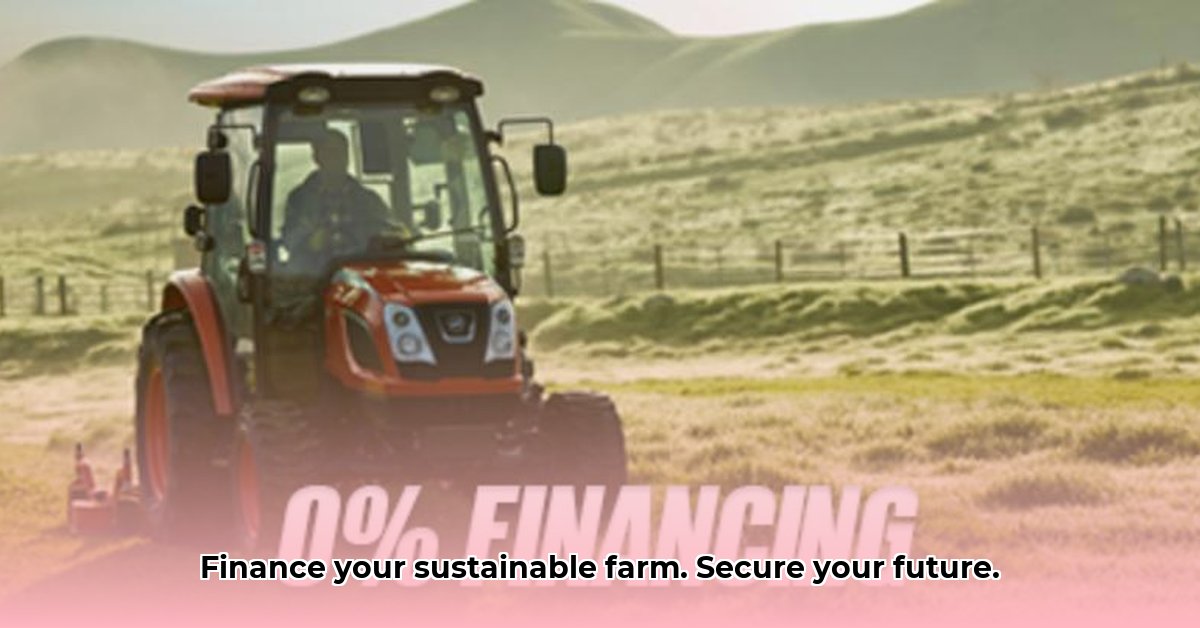
Buying a tractor is a significant investment for any farmer, especially those committed to sustainable practices. This guide provides a step-by-step approach to securing financing, covering various options and helping you choose the best fit for your farm's size and needs. For information on selling your tractor, see selling a tractor.
Understanding Your Financing Needs: Laying the Groundwork
Before exploring financing options, assess your farm's financial health. This involves understanding your current debt, annual income, and the amount you can comfortably repay monthly without compromising your farm's operations. Determining the type of tractor you need – based on farm size, crops cultivated, and chosen sustainable practices – is equally crucial. This will greatly influence the overall cost, including purchase price, maintenance, insurance, and potential loan interest. Remember, sustainable farming often requires specialized equipment, impacting the total investment. Do you have a clear picture of your farm's financial health and the tractor's total cost?
Exploring Your Financing Options: A Diverse Landscape
Several avenues exist for financing your tractor purchase. Each option comes with its advantages and disadvantages, making careful consideration essential.
1. Dealer Financing: Many agricultural equipment dealers, such as John Deere Financial, offer in-house financing plans. These often include competitive interest rates and flexible repayment schedules. However, a strong credit score is typically required.
2. USDA Loans: The United States Department of Agriculture (USDA) offers various loan programs specifically designed to support farmers. These loans often boast lower interest rates than conventional bank loans but come with specific eligibility requirements including farm size and type of operation. Are you aware of the specific eligibility criteria for USDA farm loans?
3. Personal Loans: Banks and credit unions provide personal loans, offering flexibility but typically with higher interest rates than agricultural-specific loans. This is generally less ideal and should be considered only if other options are unavailable.
4. Leasing: Leasing avoids a large upfront payment, with monthly payments spread over several years. This reduces initial financial burden but means you won't own the tractor after the lease term ends. Have you compared the total cost of leasing versus buying, considering long-term implications?
Comparing Financing Options: Weighing the Pros and Cons
This table summarizes the key advantages and disadvantages of each financing option:
| Financing Option | Advantages | Disadvantages |
|---|---|---|
| Dealer Financing | Competitive interest rates; flexible payment plans; convenient application | Requires good credit; rates may not be the lowest available. |
| USDA Loans | Lower interest rates; government support; designed for farmers | Strict eligibility criteria; application process can be lengthy and complex. |
| Personal Loans | Readily available; flexible payment options | Typically higher interest rates; can negatively impact your credit score. |
| Leasing | Lower upfront costs; reduced financial risk | You don't own the tractor at the end of the lease; may be more expensive. |
Choosing the Right Loan: A Practical Approach
Selecting the right loan requires careful planning and research. Follow these steps:
- Compare Offers: Research and compare interest rates and terms from various lenders. Don't settle for the first offer you receive.
- Pre-qualification: Check your pre-qualification for different loans to assess eligibility without a formal application.
- Negotiate: Negotiate interest rates and repayment terms with potential lenders. A little negotiation often yields positive results.
- Review Agreements: Thoroughly read and understand loan agreements before signing. Seek clarification if needed.
- Develop a Repayment Plan: Create a realistic repayment plan and consistently monitor your progress to ensure you stay on track.
Minimizing Risk: Protecting Your Investment
Financing a tractor is a considerable commitment; minimizing risks is paramount. These strategies can help:
- Secure Low Interest Rates: Aim for the lowest interest rates to reduce long-term costs.
- Assess Leasing vs. Buying: Carefully weigh the benefits of leasing versus purchasing, based on your financial situation and goals.
- Explore Grants and Subsidies: Research available government grants or subsidies to help offset costs.
- Consider Precision Agriculture: While beneficial, precision agriculture technologies require upfront investment. Consider phased implementation.
- Use Personal Loans Cautiously: If using personal loans, compare rates thoroughly to avoid financial strain.
Navigating Regulations: Compliance and Incentives
Government regulations and incentives play a significant role in sustainable farming. Be fully aware of and compliant with all environmental regulations. Ensure your chosen financing aligns with government support programs promoting sustainable practices.
The Bottom Line: Planning for Long-Term Success
Securing financing for your tractor is a crucial step. Careful planning, thorough research, and smart decision-making are essential for long-term financial success and a thriving sustainable farm. Remember, proactive financial planning is key.